
Wie Wij Zijn
Wij zijn een kleine leergemeenschap van mensen met verschillende achtergronden en afkomstig uit diverse landen, die zich verbonden voelen met de bron van Hz. Mevlânâ Rûmî (1207–1273).
Samen volgen wij een spirituele leerweg geïnspireerd door de tijdloze wijsheid van Hz. Mevlânâ Rûmî .
Hz. Mevlânâ Rûmî’s boodschap van liefde, stilte en adab spreekt mensen aan, voorbij de grenzen van religie, taal en cultuur heen.
We zien onszelf als medereizigers op de weg van Hz. Mevlânâ Rûmî, dienstbaar aan de weg, elk met een rol, in sohbet, in muziek, in hizmet.
Hz. Mevlânâ Rûmî’s uitnodiging is:
Keer om, keer terug naar je hart, keer terug naar liefde.
Deze uitnodiging biedt ruimte voor vertraging, luisteren en verbinding. Om zo met meer zachtheid en helderheid in de wereld te staan.
Zo wil onze leergemeenschap (de Mevlevi School Nederland) een plek zijn waar de woorden van Hz. Mevlânâ Rûmî’ opnieuw kunnen klinken:
“Kom, wie je ook bent,
gelovige of ongelovige,
kom, want deze weg is
de weg van liefde.”
Deze weg, verbonden met Hz. Mevlânâ Rûmî, die ooit begon in Konya, nodigt ons uit om met aandacht en overgave in het leven te staan hier en nu, samen met anderen. Als leergemeenschap staan wij in verbinding met de in Konya gevestigde Uluslararası Mevlâna Vakfı (UMV).
Hz. Mevlânâ Rûmî ’s stem klinkt vandaag, zeven eeuwen later, misschien nog luider. Want wat hij zei, raakt nog steeds:
Wij hebben overvloed, maar vaak geen betekenis.
Wij hebben woorden, maar missen stilte.
Wij hebben snelheid, maar verlangen naar rust.
In het eerste vers van de Masnavî beschrijft Hz. Mevlânâ Rûmî hoe man en vrouw zich beklagen over de pijn van het gescheiden zijn van de bron van liefde en hoe man en vrouw verlangen naar de hereniging met deze bron van liefde.
Hz. Mevlânâ Rumi vraagt ons: "Hoe lang blijf je slaaf van goud en zilver?”
De wortel van onze traditie ligt in Konya. Dit was de plaats waar Hz. Mevlânâ Rûmî met zijn kennis, in woorden en vaak in verzen uitgedrukt, zijn metgezellen inspireerde. Uit deze bron ontstond een stroom die vanuit Konya naar Oost Anatolië, (het huidige) Syrië, Iran en via West Anatolië naar Europa en naar Nederland leidde.
Gezamenlijk streven we ernaar een ruimte te creëren waarin de schoonheid en geur van de traditie een plaats vinden in onze tijd en omgeving.
De herkomst van onze traditie
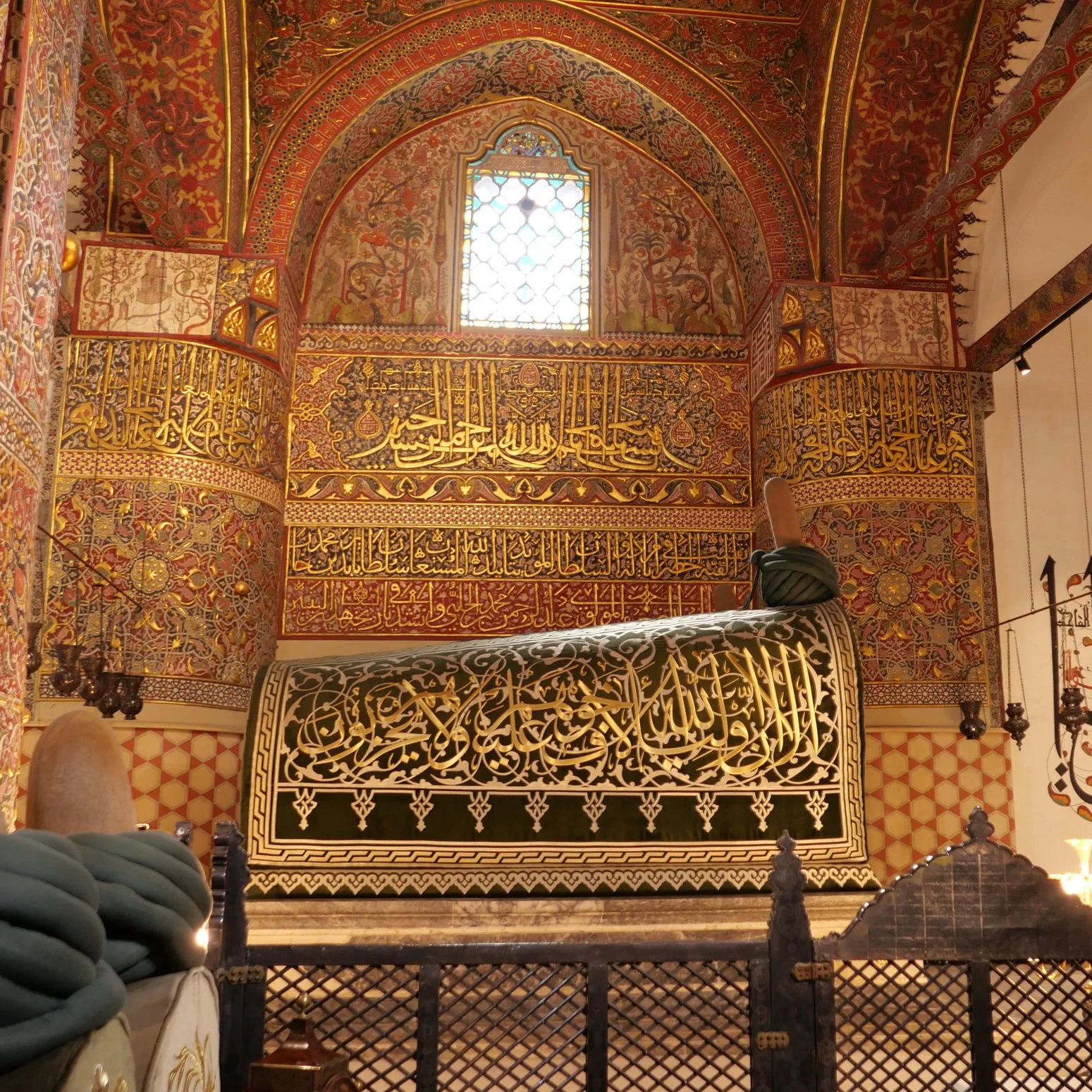
Hz. Mevlânâ Rûmî (1207–1273) was geen gewone leraar, maar een zon van kennis en liefde. Zijn leven begon in Balkh, in een familie van geleerden en edelen. Met zijn vader, Sultânu’l-Ulemâ Bahâeddin Veled, reisde hij van stad tot stad totdat ze uiteindelijk in Konya neerstreken.
Daar groeide hij uit tot een meester en leraar in de theologie. Zijn spiritueel ontwaken voltrok zich na zijn ontmoeting met de rondtrekkende derwisj Shams van Tabriz.
Wie was Hz. Mevlânâ Rûmî?
De Mevlevî orde is een levende bedding. Ze is geen systeem, maar een weg van liefde, eenheid (tawhid) en adab, gedragen door sohbet, semâ en zikir.
De traditie van de Mevlevî Orde is geworteld in het erfgoed van Hz. Mevlânâ Rûmî en wordt gevoed door de Koran en de weg van de Profeet ﷺ. Dit is een weg van liefde. adab (hoffelijkheid) en innerlijke verfijning.
Hz. Mevlânâ Rûmî zei van zichzelf:
“Zolang ik leef ben ik dienaar van de Koran. Ik ben het stof op het pad van Mohamed, de Uitverkorene.”
Voor hem was de weg van tasawwuf niet los te denken van Koran en Sunnah, maar ook niet zonder liefde. Hij zei:
“De weg van onze Profeet ﷺ is liefde. Wij zijn geboren uit liefde, en liefde is onze moeder.”
In deze visie is spiritualiteit niet los van religie, maar de adem binnen de religie: de beweging die het geloof levend houdt, voorbij vorm en dogma. Deze visie biedt een beweging: een ruimte voor vertraging, luisteren en verbinding. Om zo met meer zachtheid en helderheid in de wereld te staan.
De Mevlevî Orde
Onze Postnişîn

Onze Postnişin, Yıldırım Ekin, werd geboren in Konya, Turkije en groeide op in Nederland.
Zijn opleiding lag in technologie en innovatie, maar zijn hart vond al vroeg richting in de spirituele traditie van Hz. Mevlânâ Rûmî.
Zijn eerste lessen in geloof en spiritualiteit ontving hij in de jaren ’80 van de geleerde en schrijver Nevzat Akaltun. Op jonge leeftijd bracht zijn moeder hem in aanraking met de Masnavî, waarmee het vuur van herinnering en liefde in zijn hart ontbrandde.
Naast zijn studie en werk verdiepte hij zich in persoonlijke ontwikkeling, complementaire geneeswijzen en bewustzijnswerk. Deze paden werden door hem herkend als spiegels van de klassieke leer over de innerlijke dimensies van de mens (de Latifa en de stadia van de nafs).
Yıldırım Ekin, ontving in 2015 van Farûk Hemdem Çelebi (22e generatie erfgenaam van Hz. Mevlânâ Rûmî) de icâzet om de Mevlevî-weg in Nederland te vertegenwoordigen.
Sindsdien staat hij in Nederland als Postnişîn, niet als eigenaar van een titel, maar als dienaar van deze weg en als brug tussen Konya en Nederland, onder de huidige leiding van Makam Çelebî Farûk Hemdem Çelebi.